
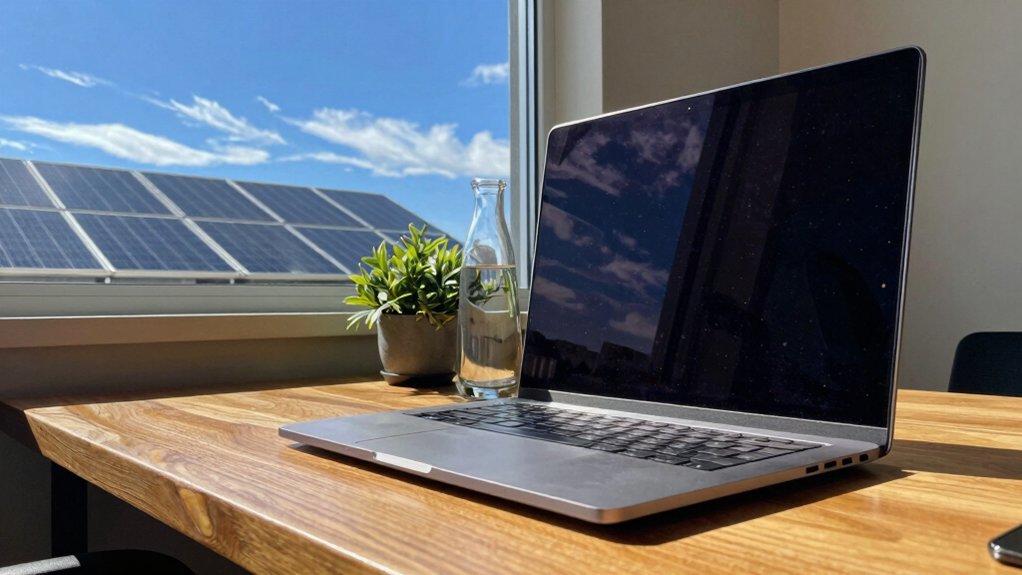
Pick solar panels for predictable daytime power and a battery to store excess for night‑time gaming, or add a compact wind turbine if you have steady breezes and space. Calculate your rig’s wattage, multiply by daily hours, and include monitors and peripherals to size the system. Choose grid‑tied if you want to sell surplus via the Smart Export Guarantee, or go off‑grid with enough storage for full independence. Check local codes, easements, and HOA rules, and claim any grants or export tariffs to lower costs—keep reading to discover the exact steps.
Pick the Best Renewable Source for Your Gaming Setup – Solar, Wind, or a Hybrid
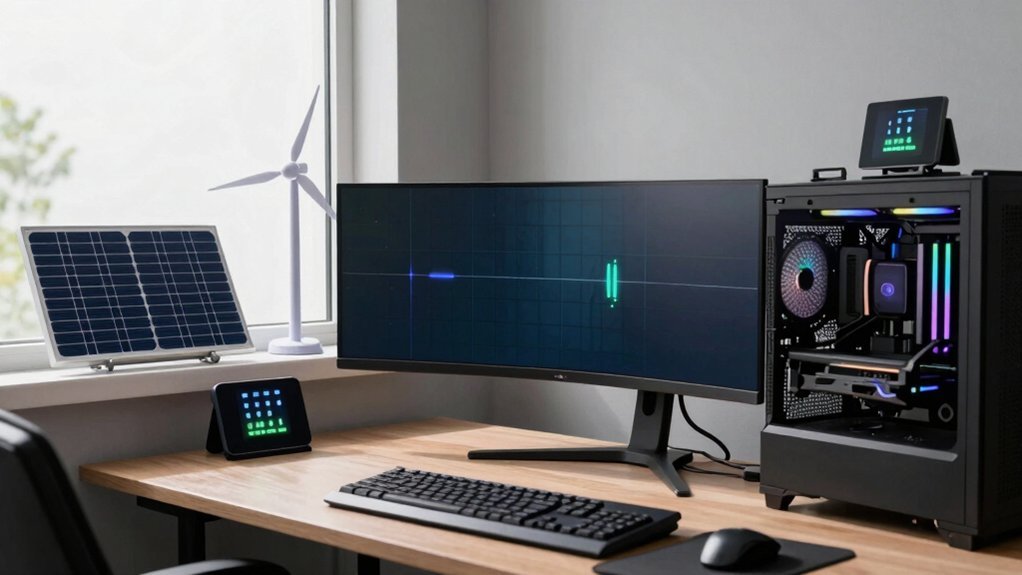
Which renewable source will keep your rig humming without draining your wallet? If you have a sunny roof, solar panels give you predictable daytime power and let you store excess in a battery for night‑time gaming.
Solar panels power daytime gaming and store excess for night‑time rigs, keeping costs low.
Wind works best where breezes are steady; a compact turbine can feed your home energy directly, but you’ll need proper siting and may face HOA limits.
A hybrid system blends solar’s reliability with wind’s night‑time boost, smoothing out weather swings and improving overall efficiency.
Choose grid‑tied if you want to sell surplus through the Smart Export Guarantee, or go off‑grid with ample storage for full independence.
Assess local codes, available space, and your typical load to pick the most cost‑effective renewable energy solution.
GaN efficiency advantages in charging hubs can reduce heat and improve performance for high‑demand setups, making compact power sources more viable for gaming rigs.
Calculate the Power Needs of Your PC, Monitor, and Peripherals for Day‑and‑Night Gaming
After deciding whether solar, wind, or a hybrid system fits your gaming space, you need to quantify exactly how much energy your rig consumes. Start with a load calculation: list each device’s wattage, multiply by daily usage, and add the results. A gaming PC power of 300‑800 W used six hours plus a 50‑W monitor for eight hours yields roughly 1,400 Wh per day. Include peripherals—keyboard, mouse, headset, cooling fans—at their idle wattage, and factor evening spikes when you’re in battle mode. Seasonal shifts matter; evenings may exceed daytime solar output, so align peak gaming PC power with battery storage or a grid‑tied system. Prioritize energy efficiency, choose solar panels sized for average daily wattage, and design energy storage to cover night‑time demand. Energy storage can help stabilize power delivery during peak gaming periods and night-time use.
Add Battery Storage to Keep Your Renewable Energy Running During Power Spikes
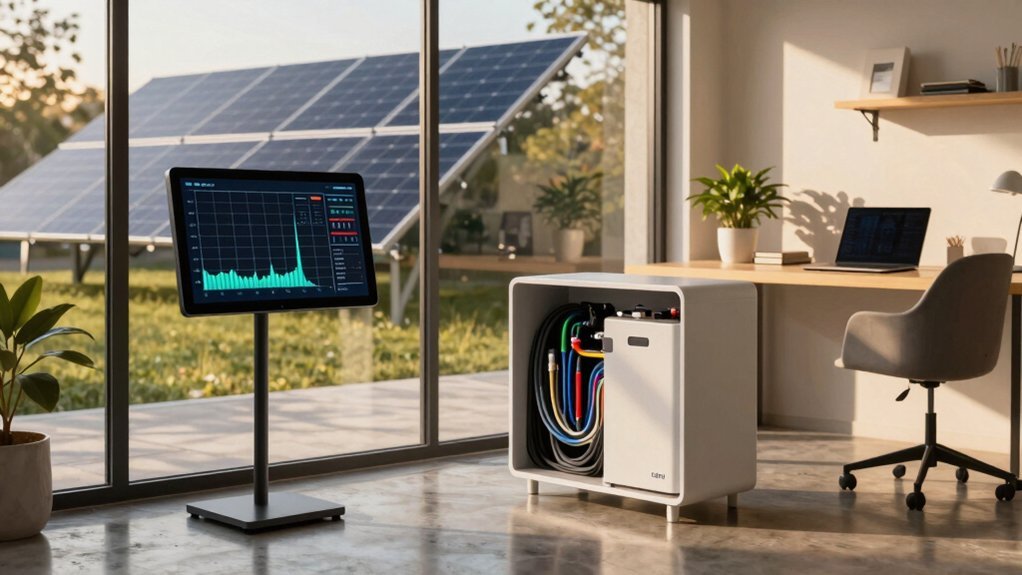
Adding a battery bank lets you capture surplus solar power during the day and release it when your gaming rig spikes or the sun sets, keeping your setup running smoothly without relying on the grid. Battery storage boosts self‑consumption of your renewable energy, smooths out cloudy‑day dips, and provides backup power during outages. By pairing a grid‑tied solar system with an energy‑storage unit, you can shave peaks, lower electricity bills, and increase resilience. Passive charging and pass‑through capabilities noted in gaming accessory design guidelines can help ensure continuous power during long sessions low latency.
Check Local Codes, Easements, and HOA Guidelines Before Installing
Wondering whether your solar or wind setup will clear the legal hurdles before you break ground? First, review local codes and building codes to know which permits you’ll need. Conduct a title search to uncover any easements or covenants that could block your plan. Contact the homeowners association and read HOA guidelines; many communities impose aesthetic or noise limits. Submit detailed plans for grid connection to the local energy office and schedule the required inspection. Ensure your installer uses certified equipment and that all paperwork meets permitting requirements. By checking permits, easements, covenants, and HOA rules early, you’ll avoid costly delays and keep your project on track. 2.5G LAN + Wi-Fi 6E; 12+2+2 power design
Use Grants, Export Tariffs, and Smart Management to Cut Your Energy Bills
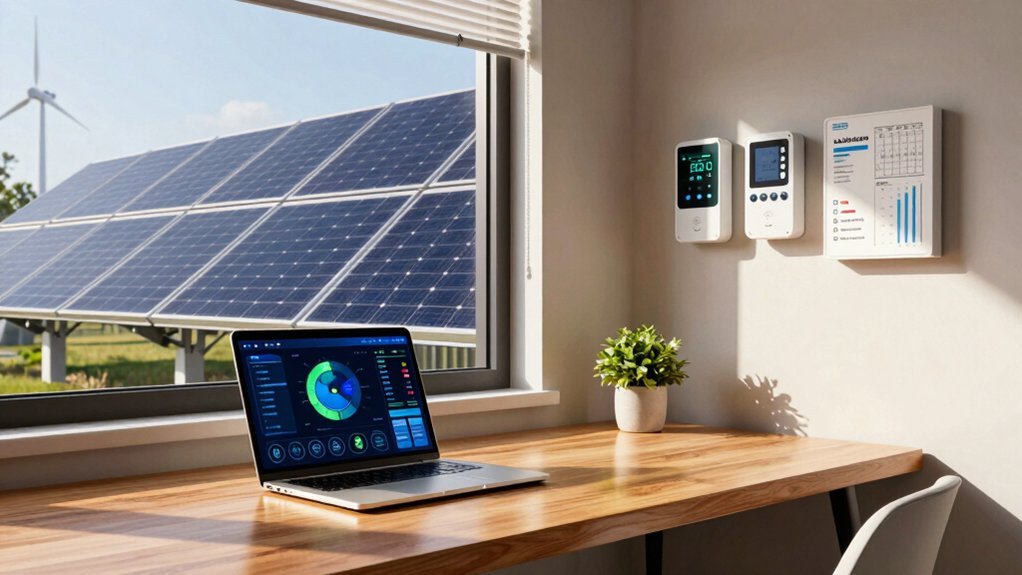
Having cleared the legal and permitting hurdles, you can now focus on cutting your energy bills with financial incentives and smart management. You’ll find that grants of £5,000 offset heat‑pump installation costs, while the Smart Export Guarantee lets you sell excess solar electricity back to the grid. Pairing solar with storage stores daytime power for night use, dramatically reducing electricity bills. Including ergonomic considerations for gear like under-desk stands can help keep your setup organized as you optimize energy use.
Frequently Asked Questions
How Do I Protect My Gaming Rig From Power Surges Using Renewable Setups?
Install a surge protector between your inverter and the rig, use a battery‑backed UPS, keep wiring short, ground everything properly, and regularly check voltage spikes to prevent damage.
Can I Integrate a Solar‑Powered VR Headset Without Extra Hardware?
Yes, you can integrate a solar‑powered VR headset without extra hardware by using a high‑capacity portable solar panel that directly charges the headset’s built‑in battery, ensuring the panel’s voltage matches the headset’s input specifications.
What’s the Best Way to Monitor Real‑Time Renewable Energy Consumption During Gameplay?
You should install a telemetry‑enabled smart meter that streams power data to a dashboard, then sync it with your gaming PC’s software so you can see real‑time renewable usage while you play.
Do Renewable Installations Affect My Internet Latency or Network Stability?
No, renewable installations don’t directly impact your internet latency or network stability. They’re separate systems; any effect would stem from indirect factors like power fluctuations, which you can mitigate with proper UPS and surge protection.
How Can I Recycle or Repurpose Old Gaming Components in a Green Setup?
You can repurpose old GPUs for distributed rendering, turn HDDs into network‑attached storage, salvage fans for passive cooling, and donate or sell functional parts to extend their life while reducing e‑waste.
In Summary
By picking the right renewable source, sizing your system, adding storage, and navigating local rules, you’ll power your gaming rig sustainably and affordably. Smart management and incentives keep costs low, while a hybrid setup ensures you never miss a frame—even during power spikes. Embrace the green upgrade, and let your setup run on clean energy without compromising performance.


