
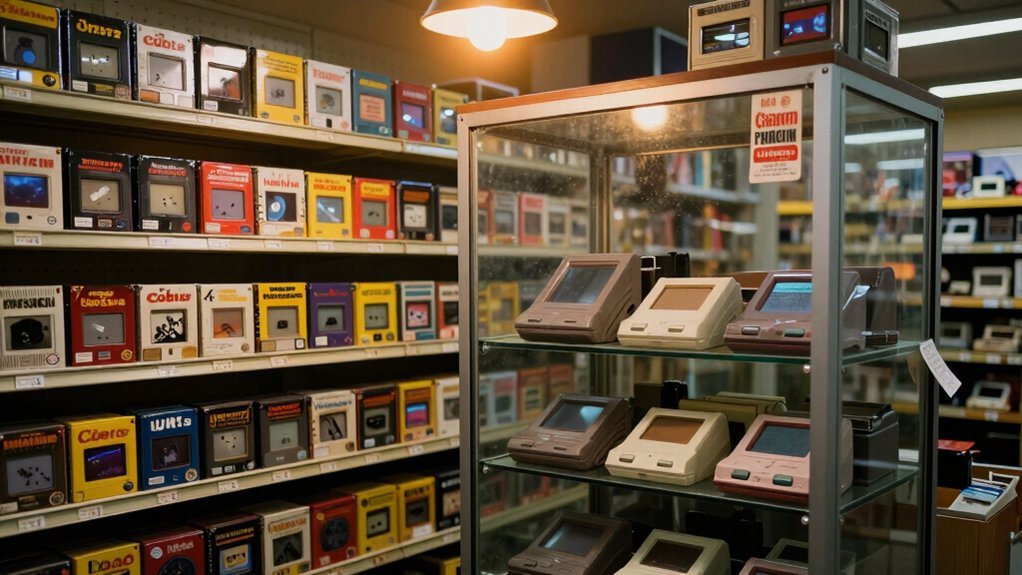
You’ll find most gaming treasures tucked away because thrift stores use a uniform $4‑$5 price band and bulk donor donations to move inventory fast, so rare titles slip into overlooked spots. Donors often pile boxes together, burying mint‑condition games in back rooms or on top‑of‑racks that staff skim. Private stores add irregular pricing and hidden booths, while online auctions pull the best items off the floor. If you keep going, you’ll discover the exact scanning tricks and app alerts that uncover these hidden gems.
Chain Stores: $4‑$5 Game Pricing Explained
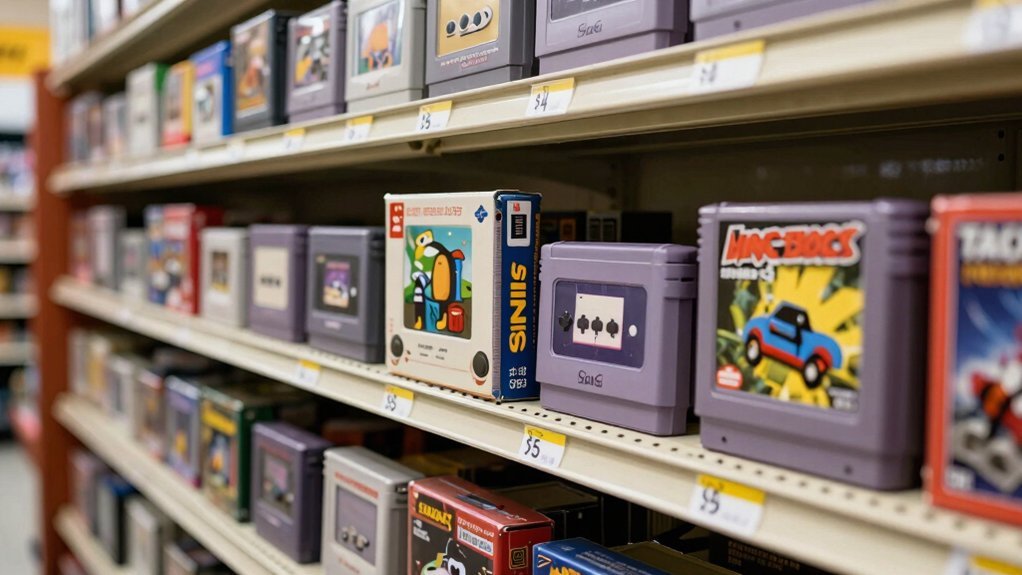
Why do Goodwill and other chain thrift stores stick to a $4‑$5 price tag for video games? You’ll notice the same thrift‑store pricing across every aisle, and it isn’t random. Chain stores receive a massive, steady flow of donated games, so they set a uniform $4‑$5 band to move inventory quickly. This predictable range lets you spot bargains without checking each title’s rarity or demand. Because donors drop off games in bulk, the stores can afford to price everything the same, regardless of platform. The constant restocking means you’ll often find new titles in that price window, making the hunt both easy and rewarding. Unlike independent shops that vary prices, chain stores keep it simple and fast. 6500K
Donor Mistakes That Hide Thrift Store Game Treasure
Even if you’ve mastered the $4‑$5 price band, you can still miss gems because donors often mishandle the items they bring in. Donors lump multiple boxes together, burying mint‑condition games in back rooms where you never glance. When they misfile a rare title into a general stack instead of a highlight reel, it blends with junk and disappears. Some thrift stores run collector stalls that shelf‑test and hide prized releases behind unrelated merch, forcing you to dig deeper. Upper‑rack or top‑shelf placement is another common trick—donors think they’re “organizing,” but you miss the coveted titles during a quick scan. Bulk electronics donations often get diverted to auctions or corporate channels, stripping the thrift store of potential gaming treasure entirely. Store layouts and donation practices, including how items are priced and shelved, can significantly influence what treasures remain visible to shoppers. Thrift-store organization practices that emphasize accessibility and visibility can help prevent these hidden gems from slipping through the cracks.
Uniform Pricing at Chains: Why Rare Finds Slip Through
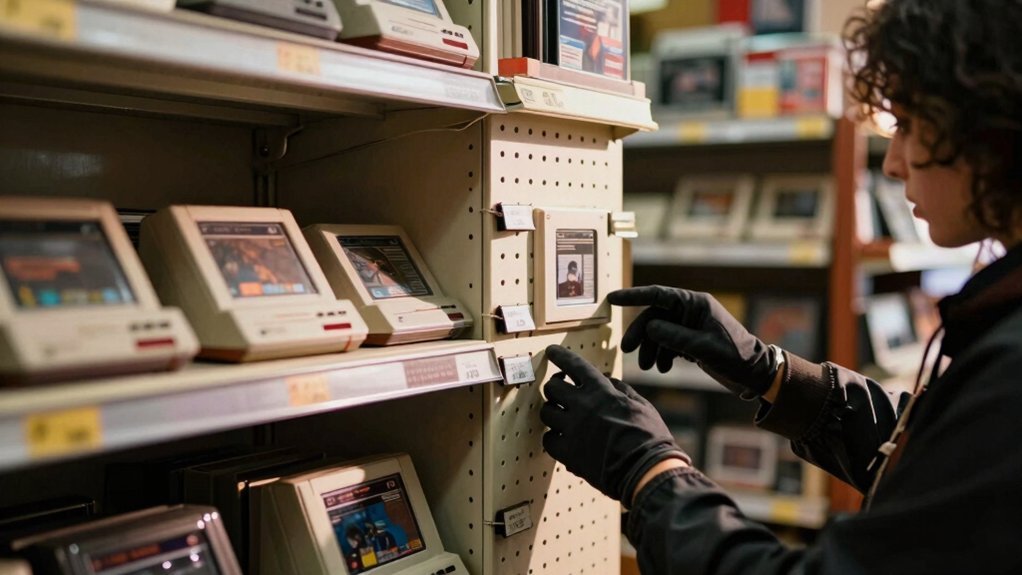
Ever wonder why you keep walking past hidden gems at big‑box thrift chains? Uniform pricing at chains like Goodwill caps games at $4–$5, so rare titles blend into the sea of mass‑market picks. You can’t spot a bargain instantly because the price tag hides true value, and frequent restocking floods the shelf with common titles. High‑turnover means coveted classics vanish before you notice, forcing you to hunt deeper or hop between locations. Donor habits dictate which games arrive, but the fixed price band makes every drop feel the same, turning rare finds into fleeting whispers. rapid restocking ensures shelves stay flooded with new releases, accelerating the disappearance of coveted items.
Top‑of‑Rack Zone: Hidden Thrift Store Game Treasure
Ever notice the dusty tops of clothing racks are often ignored, yet they hide some of the best game finds? You’ll find that quick deposits above racks happen when curbside decisions get reversed, pushing items to eye‑level spots that shoppers miss. Those perches hold lace tablecloths, vintage baskets, and odd trinkets—sometimes a boxed retro console or a sealed cartridge tucked among textiles. Make a second pass after your initial sweep; the odds of spotting a hidden game surge because many items stay perched above your line of sight. Treat the top‑of‑rack zone as a practical tactic: scan, reach, and pull down anything that looks out of place, and you’ll uncover special pieces most hunters overlook. Additionally, a quick assessment of nearby shelves can reveal related budget USB cooling gadgets that shoppers might have stashed away during a cluttered clearance.
Private Thrift Stores: Pricing Strategies and What They Mean for Hunters
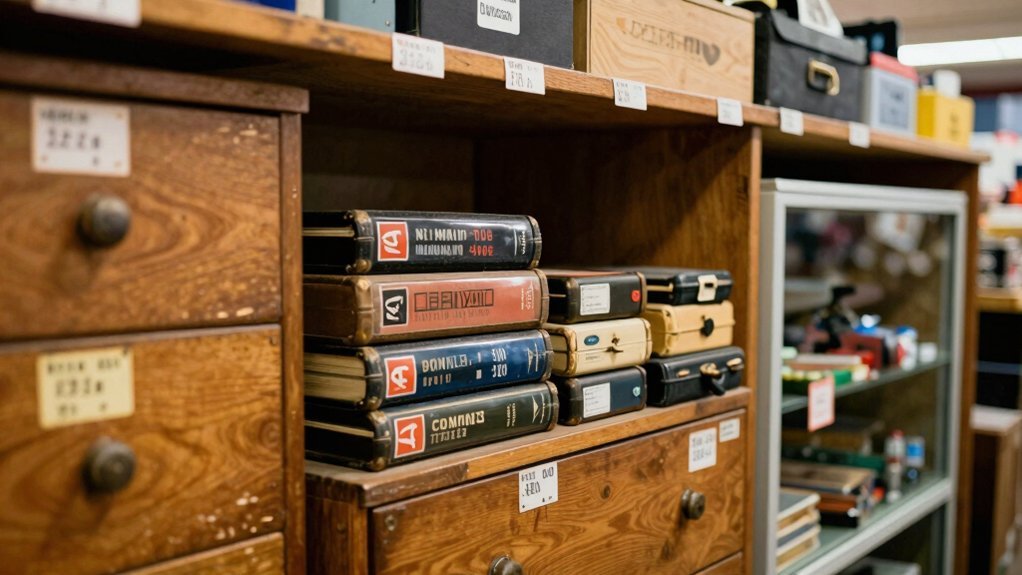
The hidden gems you spotted on the top‑of‑rack often come from private thrift stores, where pricing isn’t set by a chain’s uniform policy. You’ll notice that each booth, rack, or shelf can carry its own tag, forcing you to scan quickly and compare on the fly. Consequently inventory arrives via donors, restocks are irregular, so a rare title might appear one week and vanish the next. Your hunt strategy should consequently blend patience with sharp price‑sense, treating every display as a potential bargain zone. Private stores frequently run on cross‑vendor pricing strategies that can shift with turnover, so keeping an eye on when restocks happen can cue you to peak timing pricing variability.
Seasonal Peaks for Thrift Store Game Treasure Finds
When do the best gaming treasures appear on thrift‑store shelves? You’ll notice them popping up after the holidays and during back‑to‑school donation waves, when shelves turnover fast and rare titles surface.
Spring and early summer bring the biggest influx at chain stores because donors unload older collections and inventory resets kick in.
Private shops, however, follow irregular peaks tied to donor flow and owners’ purchasing cycles, so bursts of high‑value games can be sporadic.
Keep an eye on hidden spots—on top of clothing racks, in booth stalls, or near special donation drives—because those areas often receive seasonal restocks.
Online listings may mask these in‑store spikes, but physically checking during these periods maximizes your chances of finding hidden gaming gems.
Real‑world testing shows that latency in audio gear can affect synchronization in video applications, so pair devices with compatible codecs to reduce delays when monitoring playthroughs low latency and verify dual‑stream capability in the setup to maintain consistent audio delivery.
How Online Auctions Steal the Best Thrift Finds
Why does it feel like your favorite retro games vanish the moment you walk into a thrift store? You’re not imagining it—online auctions and resale platforms are siphoning the best finds before you even step inside. Goodwill’s shopgoodwill and similar sites pull donated collections into digital listings, where resellers outbid casual shoppers. The shift to app‑based donations and centralized inventory means fewer classic titles on the shelves, replaced by newer PS3‑era games. You’ll notice the gap widening as high‑demand items disappear into corporate marketplaces.
Retro games vanish as online resellers siphon donated collections, leaving thrift shelves with newer titles.
- Auctions attract seasoned resellers who can outbid you.
- Donated collections funnel straight to online listings.
- Inventory management consolidates stock for digital channels.
- Physical aisles now feature newer titles, not retro gems.
Spotting Holy Grails in Thrift Store Game Treasure Bins
You’ll want to scan the top of each bin first, because hidden‑bin strategies often tuck rare titles where most shoppers don’t look.
Quick spotting techniques—like flicking through the stack in a single pass—let you catch a coveted NIS or limited‑edition game before anyone else.
Keep an eye out for value‑boosting indicators such as sealed boxes, original manuals, or brand‑new condition tags that signal a true holy grail.
Additionally, consider how grip-related accessories are designed to protect controllers during handling in busy thrift environments, which can hint at well‑maintained, high‑quality finds. grip accessories
Hidden Bin Strategies
Ever wondered why the most coveted games often sit unnoticed in thrift store bins? You’ll find that the smartest hunters treat bins like puzzle pieces, not trash cans. By revisiting sections after the rush, you catch items that donors tossed onto high shelves or tucked behind clothing racks. A quick sweep of the top of racks, then a second pass after the crowd thins, dramatically raises your odds. Remember, donors restock unpredictably, so a bin that looked empty yesterday could hold a hidden grail today.
- Scan the uppermost layer of each bin before digging down.
- Check booth displays that sit above eye level; they’re often overlooked.
- Return to bins after the morning rush for a second pass.
- Treat each vendor stall as a fresh search zone, not a single static area.
Rapid Spotting Techniques
Where can you spot a hidden gem before anyone else does? You scan the top of every rack the soon as you walk in. Those high shelves hide lace textiles, baskets, vintage art and, most importantly, gaming trinkets that staff toss up to avoid clutter. Move quickly, grab a ladder or sturdy step stool, and pull a few items down.
After your first sweep, circle back for a second pass. By then, you’ll notice boxes or bins that were placed above racks or slipped into booths while you were busy elsewhere. Focus your eyes on the rack tops across all thrift stores and flea markets, and you’ll boost your odds of finding rare, high‑value gaming pieces.
Value‑Boosting Indicators
Scanning the rack tops gets you the low‑hanging fruit, but the real jackpot often hides in the treasure bins and behind‑the‑scenes sections where staff stash overflow.
You’ll notice bursts of bulk donations that flood the floor, and those sudden influxes are prime moments to spot a rare title before it disappears.
Look for pricing uniformity—most games sit at $4–$5—because a sudden price dip or a mismatched tag usually signals a hidden gem.
Consistent turnover means older niche releases, like NIS titles, surface unexpectedly, so keep your eyes peeled for any outlier that breaks the pattern.
- Bulk donation spikes in bins
- Uniform $4‑$5 pricing with occasional odd tags
- Out‑of‑place older or niche releases
- Items tucked on racks or mixed into booths
Tracking New Arrivals With Goodwill’s App
How can you stay ahead of the ever‑shifting game shelves at Goodwill? Open the “shopgoodwill” app and enable push notifications for video‑game categories. The app lists new arrivals in real time, including pre‑NES titles and occasional oddballs that never make it to the floor. Set your filter to “used games” and sort by “recently added” to catch the low‑priced $4‑$5 finds before they’re snatched. Because corporate donations and auction redirects thin the in‑store stock, the app often shows items that aren’t on the rack yet. Check the app daily; a quick glance can reveal a classic cartridge that a chain store’s uniform restock would otherwise bury under newer PS3 and later titles. This habit lets you beat the crowd and snag hidden gaming treasures.
Two‑Pass Store Sweep: Maximize Finds
- Scan the floor first, ignoring high shelves.
- Return, lift racks, and examine tops for textiles, baskets, art, and trinkets.
- Focus on booth displays where quick deposits settle.
- Prioritize small, high‑value pieces that slip past the first pass.
Reseller Flipping Shrinks In‑Store Game Stock and What to Do
Ever notice how the shelves seem emptier after a quick glance? Resellers swoop in, grab the best games, and relist them online, leaving you with thinner in‑store selections. Goodwill and similar chains price every title at $4–$5, so bargains look identical and resellers can predict profit margins. Donor‑driven restocks and store‑app auctions funnel a larger share of inventory to online marketplaces, further draining the floor. Privately owned thrift stores may surprise you with occasional, unpredictable drops, but resellers target those spikes fast. To beat the shrinkage, scan the tops of clothing racks, check hidden bins, and do a quick second‑pass sweep. By expanding your search zone, you’ll uncover the games most shoppers miss.
Preserving Game Treasure When Donating Electronics
Why worry about your beloved game collection when you donate electronics? You can protect your gaming treasure by understanding how donations travel. Goodwill often reroutes electronics to centralized processing or auction sites, shrinking in‑store visibility and reducing resale value for donors. Specialized e‑waste recyclers or refurbishers handle gadgets more efficiently, keeping your consoles and accessories out of the generic stream. Follow these steps to preserve your stash:
- Research local e‑waste programs that accept gaming hardware.
- Pack consoles, controllers, and games separately from unrelated devices.
- Include a clear inventory list and contact information for the recipient.
- Request a receipt or tracking number to confirm proper handling.
Frequently Asked Questions
What Are Some Thrifting Red Flags?
You should watch for stains, missing tags, broken zippers, heavy odors, excessive wear, unsealed seams, and any signs of water damage, because those red flags usually mean the item’s condition is poor.
What Are the Unwritten Rules of Thrifting?
You should respect staff, ask before handling, keep items organized, avoid hoarding, pay cash, return items promptly, and leave the space cleaner than you found it.
What Are the Most Sought After Thrift Items?
You’ll find vintage clothing, rare vinyl, limited‑edition sneakers, designer handbags, antique furniture, collectible toys, high‑end watches, original artwork, rare board games, and unopened electronics are the most sought‑after thrift items.
Is Thrifting Losing Popularity?
You’re still seeing thrifting thrive; people love the hunt, but the market’s shifting toward online sales and auctions, so in‑store buzz feels steadier yet less explosive than before.
In Summary
Now that you’ve learned how chain pricing, donor slip‑ups, and savvy sweeping can uncover hidden gems, you can turn any thrift run into a treasure hunt. Keep an eye on new arrivals, use the two‑pass method, and don’t let resellers drain the shelves. With these tactics, you’ll consistently snag rare games and preserve them for future play. Happy hunting!


Leave a Reply