

Pick the right moment to pounce on a rare title, cash recent sold listings to set realistic benchmarks, and keep your tone warm and respectful. Point out any cosmetic flaws casually, then bundle a few games to boost leverage. Offer a low‑ball price while showing cash and counting it aloud, and if the seller says “no,” ask for their best discount and suggest a slight increase. Walk away gracefully when the price feels steep, and stay friendly for future deals. Keep going to discover more tactics.
Pick the Right Moment to Snag Rare Games

When a super‑rare title shows up at a reasonable price, act fast—grab it before anyone else can haggle you down. You’ll want cash in hand, count it out loud, and make a clear offer while the vendor watches. If the seller hesitates, suggest a bundle: “I’m interested in this and that game—could we do a combined price?” Bundles boost your leverage and often unlock deeper discounts. Staying patient and reading the room can help you time the right moment for a better price, especially after you’ve done your market research and know typical values price awareness. When the number feels steep, say, “I like this, but it’s high for me—would you consider $X?” and then pause. Stay ready to walk away with a friendly smile and thanks; a polite exit can prompt the seller to rethink their stance and respect your valuation.
Research Pre‑Owned Game Prices With Sold Listings
Check recent sold listings to set a realistic benchmark for the game you want, then compare those prices across different platforms. Keep an eye on how the figures shift over time so you can spot trends and avoid overpaying. Knowing the historical range lets you negotiate confidently, knowing what a fair price truly looks like. Reviewing prior sale data helps you identify patterns in demand and seasonality, which can inform price trends and timing for offers.
Sold Listings for Benchmark
Sold listings give you a real‑world benchmark for what buyers actually pay, letting you spot a fair price range for any pre‑owned game. Scan recent sold listings, note condition tags, and compare prices across regions. Prioritize the newest sales; they reflect current demand and market volatility. If a title shows many sales at a tight price band, you can safely aim for the mid‑point. For scarce, high‑demand games, a few high‑priced sales may justify a higher offer. Use the data to justify your proposal, citing the average recent sale or the typical discount from listing prices. Continuous monitoring helps you spot shifts in demand and price dynamics over time, reinforcing smarter negotiation decisions. Current market trends inform adjustments to your bid strategy based on observed sale velocity and regional variations.
| Condition | Recent Avg. Price | Price Range |
|---|---|---|
| Complete | $45 | $40‑$50 |
| Loose | $30 | $25‑$35 |
| Cosmetic Flaws | $20 | $15‑$25 |
Track Historical Price Trends
Ever wondered how a game’s value shifts over months? You can spot price trends by pulling sold listings from auction sites, forums, and marketplace apps. Log each sale’s price, condition, completeness, and region, then chart the numbers over weeks or months. When a new batch hits an expo or a bundle appears at a flea market, you’ll see a dip or spike that signals a temporary swing. Compare those trends with prices you encounter at pawn shops, swap meets, or online stores to gauge where the market settles. Use the recorded averages as a baseline, then adjust for your copy’s condition. When you negotiate, cite the recent sale data to back up your offer and avoid overpaying for marginal differences. The process can be streamlined by maintaining a organized price-trend log, noting sources and dates for quick reference during negotiations.
Start the Conversation With a Friendly, Respectful Tone
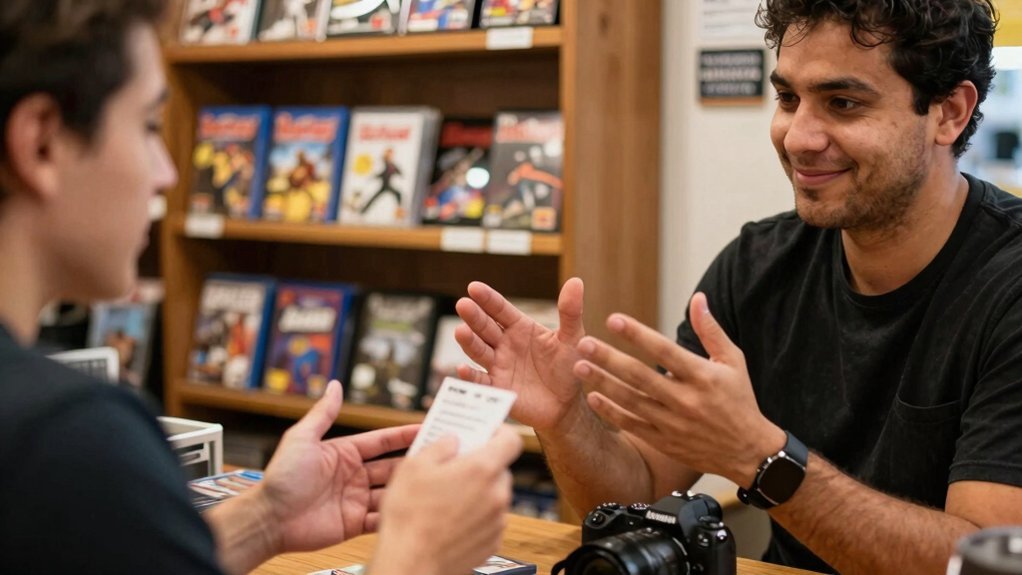
When you greet the seller with a warm, respectful hello, you set the stage for a collaborative negotiation; a friendly tone builds rapport, makes the seller feel valued, and opens the door to a smoother discussion about price. Begin by asking how their day’s going or commenting on a shared interest, like the game’s artwork. This shows you’re not just a bargain hunter but a genuine buyer. Keep your language upbeat and avoid jargon; a friendly tone signals respect and reduces defensiveness. Transition naturally to the item, saying something like, “I love this title—could we talk about its price?” By framing the conversation as a partnership, you lay groundwork for open‑ended offers later, while preserving the seller’s willingness to engage. Collaboration benefits can help both sides reach a fair agreement.
Point Out Cosmetic Flaws Without Offending the Seller
Wondering how to bring up a scratch or a faded label without hurting the seller’s feelings? You can start by saying, “I noticed a few minor flaws—like a faint scratch on the case and a slightly worn label—are they factored into the price?” This frames the issue as a question, not a criticism, and shows you respect the seller’s knowledge. Use the flaws as a natural conversation starter, acknowledging they might already be in the sticker price, then suggest a modest reduction: “If those imperfections are considered, could we meet at a lower amount?” Keep your tone friendly, avoid pressuring language, and focus on the small impact of the flaws on overall value. This approach lets you negotiate confidently while preserving goodwill. A quick reminder: universal-fit car accessories like a console cover can influence perceived value if they show wear or mismatches in color, so noting compatibility and condition helps frame your offer value retention.
Bundle Multiple Items to Increase Your Bargaining Power

Looking to stretch every dollar on a used‑game haul? Start by grouping three or more titles and propose a single price—bundling lets you negotiate a better overall discount than haggling over each game. You you the table theWould table lot you the $10?” and watch the seller’s eyes widen. If one title is a high‑value find and the others are weaker, ask for a lower total for the set instead of demanding separate cuts. Adjust the mix if needed, and be ready to offer a modestly higher sum than your initial target to seal the deal. Bundling typically open s multi‑item savings that outpace single‑item low‑ball tactics, giving you stronger leverage and a smoother checkout.
Craft a Low‑Ball Offer That Feels Reasonable to Both Sides
You start by quoting a price that feels fair and show how it benefits both you and the seller. Phrase the offer as a question—“Would you consider $X?”—to keep the tone collaborative and open. Keep cash in hand and visible, then if the seller pushes back, respond with a modestly higher bundled offer or ask for a lot discount instead of a single‑item cut. Charging efficiency
Offer Price Strategically
Start with a low‑but‑reasonable offer—say $4 or $5 for a higher‑priced game—to signal value without insulting the seller. You’ll offer price strategically by framing the number as a question: “Would you consider $4 for this?” This keeps the dialogue open and shows flexibility. If you’re buying several titles, bundle them and say, “All three for $12?” Cash in hand adds weight; count it aloud, “I have $10 right here,” which anchors a lower counteroffer. Should the vendor decline, calmly propose the best discount you can and be ready to walk away with a friendly goodbye.
| Tactic | Example |
|---|---|
| Question format | “Would you consider $4?” |
| Bundle offer | “Three games for $12?” |
| Cash anchor | “I have $10 cash now.” |
Highlight Mutual Benefits
After framing your offer as a question, shift focus to the win‑win angle: explain how a quick, cash‑in‑hand deal clears the seller’s inventory while landing you a solid discount. Show that the transaction delivers mutual benefits—speed for them, savings for you—so the price feels reasonable to both sides. Use a low‑ball figure that’s lower than the asking but not insulting, then bundle three games into one combined amount. Count the cash visibly, reinforcing seriousness and speed. If the seller counters, raise your total slightly to meet halfway, preserving the mutual benefits narrative.
- Present a single, lower‑than‑asking price.
- Bundle three titles together for a unified offer.
- Display cash in hand and count it aloud.
- Respond to counters with a modest increase, keeping the deal balanced.
Respond to a “No” and Ask for the Seller’s Best Discount
If the seller declines your opening offer, politely ask for their best possible discount and follow up with a flexible counter‑proposal—such as “Would you consider $X?”—to keep the dialogue open and signal you’re still interested while leaving room for further concession. You can then haggle by suggesting a bundle or a slightly higher price that still undercuts their asking price, showing you’re serious but not desperate. Stay courteous, and if they won’t budge, be ready to walk away; that signals value and often triggers a last‑minute concession.
| Situation | Possible Move |
|---|---|
| “No” to initial offer | Ask for best discount |
| Discount offered | Counter with “Would you consider $X?” |
| Still “No” | Propose bundle or walk away |
Strengthen Your Offer by Showing Cash and Counting It Aloud
Pull out your cash and lay it on the table so the seller sees you’re serious. Count the bills out loud as you state the amount, confirming the exact figure and showing transparency. This straightforward display lets you start with a reasonable offer and pushes the seller toward a quick, favorable concession.
Visible Visible Cash Offer
Ever wondered how a simple cash reveal can tip the scales in your favor? When you place a stack of bills on the table, the seller sees cash shown and feels the transaction is real. You’ve already set a concrete price, so any dip feels like a loss for them. Keep a firm, polite tone as you count the total aloud; it shows transparency and deters price inflation. Pair this visual cue with a bulk offer—maybe two games for a discounted rate—to amplify perceived value. The seller now sees both money and a ready‑to‑close deal, making them more likely to accept your terms.
- Lay out the exact amount in clear view.
- Count each bill slowly, emphasizing the total.
- State the price you’re willing to pay before negotiations.
- Add a bundled offer to increase leverage.
Count Money Out Loud
How can you make your offer impossible to ignore? Grab the cash, hold it up, and start counting out loud as you state your price. When you say, “I like this, but price is high for me—would you consider $30?” and then count each bill, you anchor the negotiation with a concrete, visible amount. This audible tally signals seriousness and forces the seller to confront the exact figure, not an abstract number. Keep the stack modest—no towering piles—so you appear prepared but not aggressive. Cash‑only offers speed up concessions because sellers value instant payment over checks or digital transfers. By counting the cash aloud, you reinforce transparency, show your floor, and make the deal feel immediate and unavoidable.
Walk Away Gracefully When the Price Isn’t Right
Wondering how to keep the negotiation on your terms? When the seller’s price feels steep, you can still protect your budget and keep the vibe friendly. Start by saying, “I like this, but the price is high for me—would you consider X?” If they stall, be ready to walk away gracefully. Show you’re willing to leave, and the seller may counter with a better offer. Keep cash in hand, count it out loud, and bundle items to boost leverage. A polite smile and a thank‑you as you exit preserve goodwill for any future deals.
- State your concern and propose a lower figure.
- Display cash visibly while naming the amount.
- Bundle multiple games and suggest a combined price.
- Thank the seller, smile, and walk away gracefully.
Build Repeat‑Visit Relationships That Unlock Future Discounts
Why not turn each visit into a habit that pays off? You’ll find that repeat visits turn strangers into allies. When you show up regularly at pawn shops, swap meets, flea markets, and stores, staff start recognizing you as a dependable buyer. That familiarity earns heads‑ups on fresh stock and occasional two‑for‑one deals. Keep your interactions polite and consistent; trust builds faster than a single purchase. Ask sellers about upcoming arrivals and let them know you’re a long‑term customer, not a one‑off haggler. Over time, you’ll secure first pick on new titles and enjoy discounts that aren’t advertised to casual shoppers. By carving out a routine of repeat visits, you unlock a steady stream of savings and better selection.
Frequently Asked Questions
What Is the 20 Rule for Video Games?
You aim to pay roughly 20 % of the game’s original retail price—about one‑fifth of its listed tag—adjusting for condition, rarity, and demand while negotiating a lower offer.
What Is a Polite Way to Ask for a Lower Price?
You could say, “I love this game, but it’s a bit above my budget—could you meet me halfway at $X?” This shows appreciation, states your limit, and invites a friendly compromise.
How to Negotiate to Lower Down the Price of an Item?
Start by offering a specific lower amount, then point out any flaws and bundle items if possible. Keep the tone friendly, ask for a discount, and be ready to walk away if needed.
Can You Haggle Prices at a Pawn Shop?
Yes, you can haggle at a pawn shop; start friendly, point out wear, know market values, offer cash, and suggest bundles or trade‑ins to push the price down.
In Summary
By timing your hunt, doing your homework, and staying courteous, you’ll turn a simple negotiation into a win‑win. Highlight flaws politely, bundle deals, and be ready to walk away if the price doesn’t fit. Show cash confidence, and keep the door open for future discounts. Follow these steps, and you’ll consistently snag pre‑owned games at prices that feel right.


