

Upgrade to a 360 mm AIO or a 250 W+ air cooler and keep your CPU from throttling, then add premium thermal paste for better heat transfer. Pair that with a fast NVMe SSD to shave load‑times, and make sure your case has high‑flow fans and a clean cable layout for optimal airflow. Finally, choose DDR5 RAM with high frequency and low CL in a dual‑channel setup to cut texture fetch latency. Keep going and you’ll discover the details behind each upgrade.
How to Choose RAM Frequency & Latency for Maximum FPS
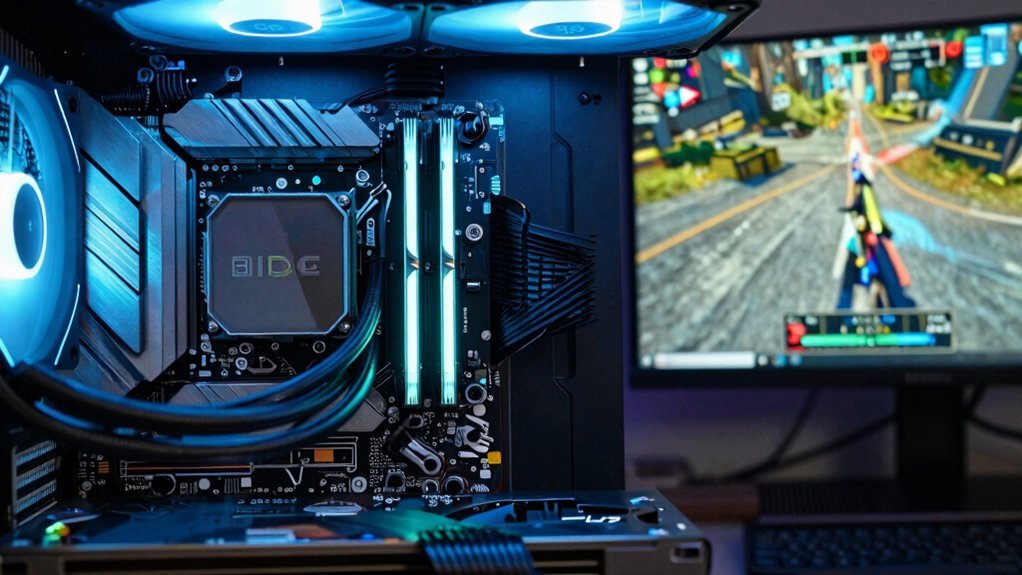
What should you look for in RAM when you want every frame to count? You chase high RAM frequency and low CL latency because they cut the time the CPU spends fetching textures, boosting FPS. Opt for DDR5, which delivers superior memory bandwidth and tighter memory timings than DDR4, and pair sticks in dual‑channel mode to avoid bottlenecks. Faster bandwidth lets texture streaming flow smoothly, keeping game performance steady during intense scenes. Lower CL latency trims in‑game responsiveness delays, so each input registers instantly. Together, these specs shrink loading times and prevent frame drops. In short, prioritize a high‑frequency, low‑latency DDR5 kit on a dual‑channel board to maximize FPS and keep your gameplay razor‑sharp. Dual‑channel connection can further stabilize data transfer and sustain higher sustained FPS during long sessions.
How to Pick a CPU Cooler That Keeps Boost Clocks High
Ever wondered why your high‑end CPU loses steam during intense gaming sessions? You need a cooler that keeps CPU temperatures low enough to avoid thermal throttling, letting boost clocks stay high and gaming performance stable. Consider a 360 mm AIO or a 250 W+ air cooler that ensures solid contact and airflow, and verify mounting pressure to maximize heat transfer fin density for optimal cooling. Use monitoring temps tools like MSI Afterburner or HWMonitor to confirm you stay in the 35–75 °C sweet spot.
How to Apply Premium Thermal Paste for Higher FPS
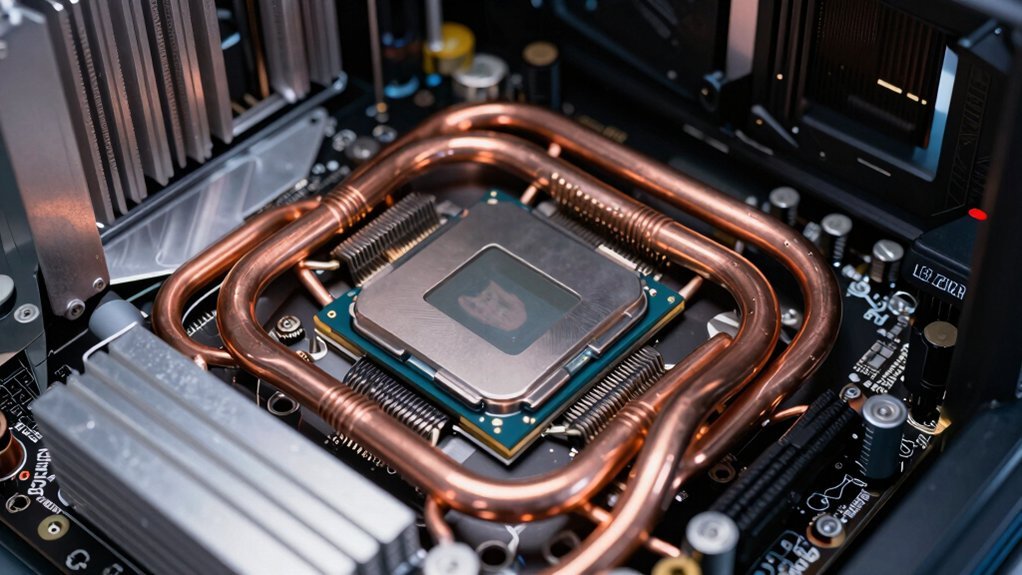
After securing a solid cooler, the next step is to perfect the thermal interface between the CPU and its heatsink. You’ll want a high‑quality thermal paste; a pea‑sized dot in the CPU center spreads evenly when you seat the cooler, preventing air pockets that hinder heat transfer. Press the cooler down firmly, then twist slightly to spread the paste thinly across the surface. Additionally, consider planning for future expansion by allocating 20-30% more capacity for additional cooling and components as part of your overall setup growth, expansion, and planning.
This application technique yields a noticeable temperature drop of 5‑10 °C for both CPU cooling and GPU cooling if you also re‑paste the GPU. Lower temps reduce thermal throttling, letting boost clocks stay high and translating into smoother FPS.
Reapply every two to three years to keep cooling performance at its peak.
How to Install a Fast NVMe SSD to Boost FPS
Where can you find the biggest FPS boost without touching the GPU? By installing a fast NVMe SSD in your gaming system. The NVMe SSD plugs into an M.2 slot that supports PCIe x4, delivering blazing‑quick loading times and smoother frame pacing. Proper cooling and heat dissipation keep NVMe performance steady, preventing throttling during long sessions. Follow these steps for a clean install:
- Power down, open the case, locate the M.2 slot, and verify PCIe x4 support.
- Insert the NVMe SSD at a slight angle, then secure it with the screw.
- Attach any aftermarket heatsink or ensure the motherboard’s cooling solution contacts the drive.
- Re‑assemble, boot, and enable DirectStorage or NVMe‑optimized settings in your OS.
You’ll notice reduced texture pop‑ins, lower CPU overhead, and a noticeable FPS lift.
How to Optimize Case Airflow for Consistent FPS
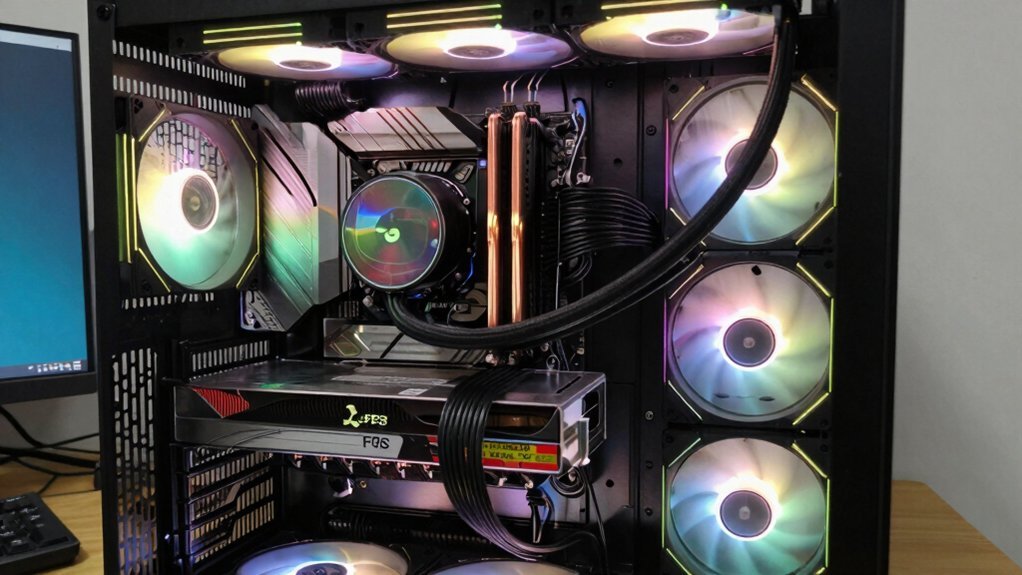
How can you keep your frame rates steady when the hardware starts heating up? First, set up a clear front‑to‑back or bottom‑to‑top airflow path. Mount intake fans at the front or bottom and exhaust fans at the top or rear, aiming for a slight positive pressure to keep dust out. Choose a mesh‑front case or add open ventilation to boost intake efficiency. Balance the number of case fans so that cool air rushes in while hot air is expelled, reducing temperatures that trigger CPU/GPU throttling. Adjust fan curves to ramp up speed as heat rises, and schedule regular dust removal. Maintaining this intake/exhaust balance keeps airflow optimum, stabilizes temperatures, and preserves consistent FPS. Implementing pre-installed cable management and modular mounting considerations can also help maintain steady airflow by keeping interior clutter minimal cable management features and ensuring unobstructed paths for air.
Frequently Asked Questions
Does Cooler Boost Increase FPS?
Yes, a better cooler can raise your FPS. By keeping temperatures low, it prevents thermal throttling, letting your CPU sustain higher boost clocks longer, which translates into smoother, higher frame rates during gameplay.
Does Cooling Improve FPS?
Yes, cooling improves FPS. By keeping your CPU and GPU temperatures low, you prevent thermal throttling, maintain higher boost clocks, and sustain smoother frame rates during demanding gaming sessions.
What to Upgrade to Improve FPS?
Upgrade to a faster CPU cooler, apply premium thermal paste, install a 360 mm AIO or high‑quality air cooler, and add a DDR5 RAM kit in dual‑channel; these steps directly raise FPS.
Is 500 FPS Overkill?
You’re probably chasing diminishing returns; 500 fps is overkill for most monitors and games, and it forces unnecessary hardware strain, so focus on smooth, consistent performance instead.
In Summary
By fine‑tuning your RAM speed, slapping on a top‑tier cooler, applying premium thermal paste, swapping in a lightning‑fast NVMe, and perfecting case airflow, you’ll keep every component running at its peak. Those upgrades shave latency, sustain boost clocks, and eliminate bottlenecks, translating directly into smoother, higher‑FPS gameplay. Implement them now and watch your frames climb while your system stays cool and responsive.


Leave a Reply