
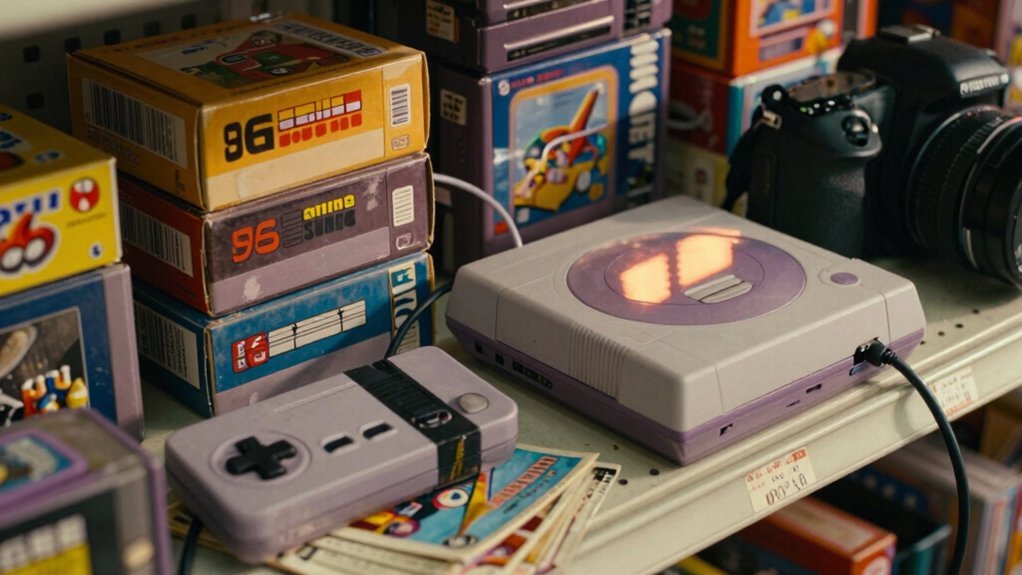
Set a realistic $50‑$100 monthly budget and split it into $5 caps for common titles and $10‑$20 for rarer finds, logging every purchase and keeping a 10‑15% buffer. Visit thrift stores weekly; restocks and donation spikes bring fresh inventory, and uniform pricing lets you spot bargains fast. Build rapport with staff for insider alerts, and check cartridges on‑site by powering them up, cleaning contacts, and watching for flicker or audio pops. Negotiate bulk discounts, note condition, and track your collection—keep going for deeper strategies.
Set a Realistic Budget Before You Start Hunting

How much can you realistically spend on retro gaming each month? Set a clear budget that matches your finances—most hunters aim for $50–$100. Divide that amount into a per‑item cap: no more than $5 for standard titles and $10–$20 for rare finds. Keep a simple log or use an app to track every purchase, so you never exceed your budget across multiple trips. Prioritize playable games over complete collections; you’ll get more fun for each dollar. Reserve a small emergency buffer, about 10–15 % of your total budget, for unexpected gems or shipping fees when you shop online. By sticking to these limits, you stay disciplined, avoid overspending, and keep the hunt enjoyable. Surface compatibility guidance
Understand Why Thrift‑Store Hunting Works for Retro Games
After you’ve set a realistic budget, the next step is to see why thrift‑store hunting actually works for retro games. High donor turnover means shelves refresh constantly, so you’ll often find $4–$5 titles that other markets price far higher. Uniform pricing across chains lets you spot bargains fast, while private stores add price variance that can hide rare gems. Regular trips build familiarity with layouts and staff, boosting your odds of catching hidden loot during peak donation periods.
- Frequent restocks – new inventory arrives weekly.
- Uniform price bands – easy comparison across titles.
- Holiday donation spikes – larger selection during seasonal peaks.
- Staff relationships – insiders can tip you off to upcoming arrivals.
Scout Chain Stores for Consistent Retro‑Game Price Bands
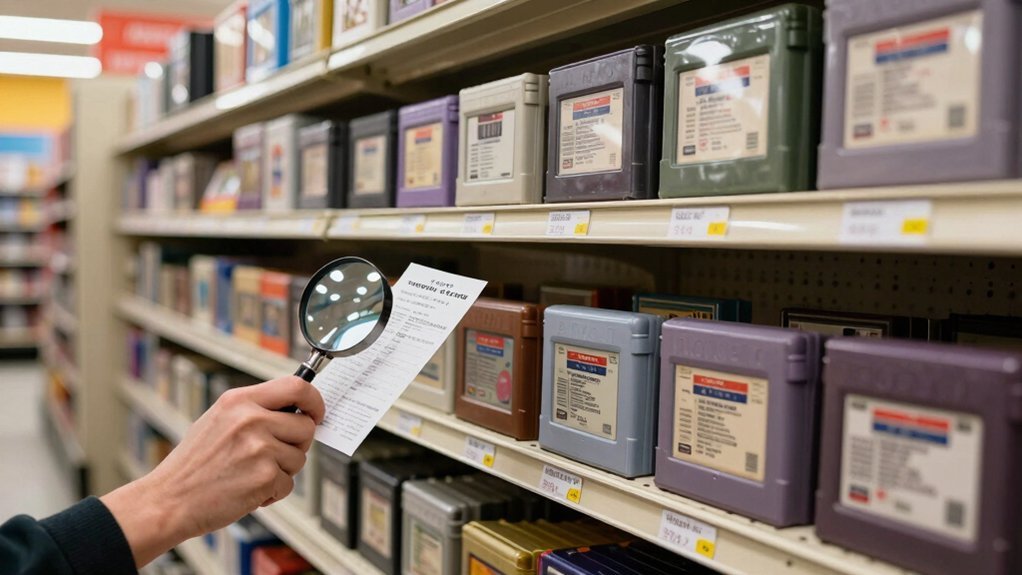
Ever wondered why chain thrift stores are a goldmine for retro‑game hunters? You’ll notice they stick to a $4–$5 price band, no matter the console or title, so you can scan shelves and instantly know if a game’s a steal. Because the pricing is uniform, you spot bargains faster than at boutique shops. These chains restock regularly, flooding the aisles with familiar classics and occasional hidden gems. The predictable cost lets you assess value in seconds, letting you decide whether to snag a copy or walk away. Uniform pricing helps you compare items quickly across locations and streamlines your scouting process.
Target Independent Shops for Hidden Retro‑Game Gems
Chain stores give you a reliable price band, but independent thrift shops hold the real surprises. You’ll find hidden retro‑game gems in independentshops because donations vary wildly and owners price each item individually. Rare titles often appear below collector‑grade market values, and frequent visits let you catch fresh stock before it disappears. Building a rapport with owners gives you insider tips on upcoming arrivals and discount plans, turning a casual browse into a treasure hunt. Regulars frequently discover limited releases when they visit the right price trends and time their trips.
Check Cartridge Condition Quickly
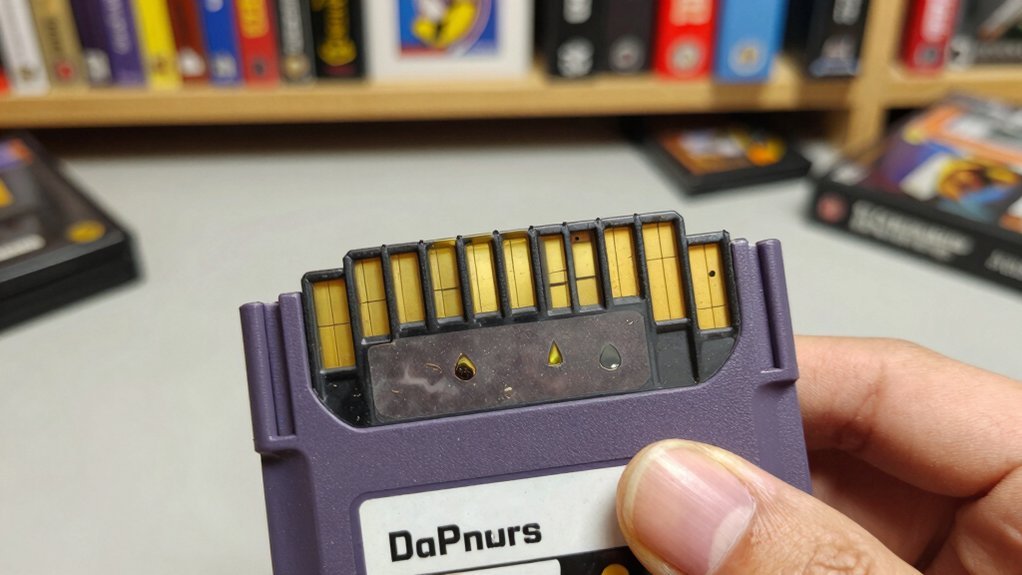
How can you tell if a cartridge is worth a closer look without spending hours on it? First, power the console or hook the cartridge to a quick‑test rig; if the game boots past the start screen, the basic electronics work. Next, examine the contact points—look for corrosion or heavy oxidation and wipe them gently with a microfiber cloth or an isopropyl‑alcohol swab. Then, scan the shell for cracks, swelling, or broken tabs; any major damage usually signals internal issues. Check the label and stickers for wear, mislabeling, or bent pins that could hint at non‑original hardware. Prioritize cartridges with clean labels, intact stickers, and minimal cosmetic wear, especially when the title is known to be rare or in high demand. This rapid assessment lets you gauge cartridge condition efficiently. A quick review of the cartridge’s voltage and clock timing can help you anticipate potential compatibility concerns with newer systems upgrade compatibility and plan for any needed adapters or repairs.
Spot Rare, High‑Value Games in Seconds
Spotting rare, high‑value games in seconds hinges on a few visual shortcuts. You’ll instantly recognize a sealed cartridge, a bright sign of untouched rarity, and you’ll spot a complete‑in‑box set that includes the original manual and inserts. Your eyes should hunt for iconic 8‑bit and 16‑bit titles that stand out on generic shelves, and you’ll notice price stickers that hint at common stock while hinting at hidden gems.
- Look for sealed or factory‑sealed boxes—these command premium prices.
- Prioritize known high‑demand NES/SNES releases; they pop visually.
- Scan for complete‑in‑box sets with all original paperwork.
- Notice regional variants, poster inserts, or unique packaging that boost value.
Network With Staff for Early Alerts on New Stock
You’ll get the best finds by building relationships with the staff early and keeping your updates brief. Ask about shipment days and preferred visiting times so you can swing by right when fresh games arrive. A quick, polite script about high‑demand titles shows you respect the store flow while staying on top of new stock. Be mindful of your power and electrical characteristics when evaluating new stock arrivals and how they might fit into your setup.
Build Relationships Early
Curious about snagging the next rare cartridge before anyone else? You’ll find that genuine thrift store interactions can turn a casual browse into a treasure hunt. Start by introducing yourself as a serious retro gamer and ask about restock days or new arrivals. Hand over a business card or exchange contact details so staff can ping you when specific titles land. Offer to donate or trade surplus items for early‑notification privileges, reinforcing a reciprocal vibe. Visiting on weekdays or after‑work hours gives staff more time to share insights, and asking to be on internal waitlists secures first access before the crowd. Proactively track restock schedules to optimize your chances.
Share Stock Updates Quickly
After you’ve built rapport, keep the momentum by setting up a quick daily check‑in with staff for early stock alerts. Schedule a brief morning chat or leave a note in a shared notebook where employees can flag “ships today” or “restocked this morning” retro gaming finds. Track arrival patterns—weekends, post‑donation spikes—to prioritize visits when high‑value games are most likely to appear. Real‑time updates help you stay ahead of new retro gaming stock as it arrives. Thank staff for tips and outages; respectful relationships increase the likelihood of being tipped off about desirable retro gaming items first.
Test Cartridge Functionality On‑Site While Thrift‑Store Hunting
You should bring a small handheld tester or portable CRT with its own power so you can check a cartridge’s readability the moment you spot it.
Insert the game, power the system, and watch for a clean title‑screen boot without glitches, freezes, or sound distortion.
If it passes the basic read/boot test, you’ve got a playable find; if not, note the issue for a cheap repair later.
Test Cartridge Functionality‑‑Site
When you spot a cartridge on the shelf, plug the console into a portable battery tester or a nearby outlet and power it up right then to see if it boots cleanly. First, glance at the contacts; if they look corroded, wipe them with an eraser or isopropyl cloth before you start cartridge testing. Then, watch for the splash screen and a few seconds of gameplay—any graphic flicker or audio pop means you’ve got a problem. Finally, try a quick save or reset to gauge memory health. Prioritizing high‑value titles saves time and ensures you walk away with usable gems.
- Use a battery‑powered tester or outlet.
- Clean contacts with eraser/isopropyl.
- Verify splash screen and glitch‑free play.
- Check save/reset functionality.
Carry Portable Testing Kit
Ever wondered how to turn a thrift‑store aisle into a mini‑lab? Pack a lightweight kit—under 1 kg—so you can test cartridges on the spot. Include a multi‑card Nintendo/SEGA tester, contact cleaner, a USB‑powered HDMI/SD dongle, and a spare battery pack. Slip a handheld console or multi‑cart adapter, a tiny Phillips and flat‑head screwdriver, and a USB‑C or AA‑powered screen into a slim carry case. When you spot a promising title, run a power‑on check, verify read‑ability, and watch for clear audio/video. Clean edge connectors with a microfiber cloth, cotton swabs, and a soft eraser. Jot notes—item, condition, test result, price—on a pocket notepad or phone. This routine filters out dead goods and lets you snag true thrift store treasures.
Negotiate Prices Respectfully and Leverage Bulk Deals
Building rapport with the thrift‑store seller and casually mentioning similar listings you’ve seen sets a fair baseline, letting you slide into a bulk‑purchase proposal—say three to five games—to unlock a visible discount. You can then suggest a cash payment or a modest counteroffer like “$8 per title for these three,” keeping tone respectful and specific. Point out minor flaws—scratches, label wear, missing manuals—to justify the lower price, and be ready to walk away if the seller won’t budge; thank them and revisit later, as inventory shifts often bring price drops.
- Mention comparable listings to set expectations.
- Propose 3‑5 games for a bulk deals discount.
- Offer cash or a clear counteroffer.
- Highlight condition issues to support your ask.
Document and Track Your Retro‑Game Collection for Future Valuation
If you want to know exactly how much your retro‑game stash is worth, start by logging each title in a dedicated inventory system—whether it’s a spreadsheet, a specialized app, or even a simple notebook—recording platform, region, condition, purchase price, date, and any notes on completeness or accessories. Use unique IDs and note storage locations, then cross‑check recent marketplace listings to estimate current value. Keep provenance notes for authenticity and schedule quarterly audits to update condition and prune excess. This disciplined inventory management lets you spot trends, negotiate sales, and protect your collection’s future valuation.
| ID | Title & Platform | Location |
|---|---|---|
| 001 | Super Mario Bros. (NES) | Shelf A3 |
| 002 | Chrono Trigger (SNES) | Box B1 |
| 003 | Sonic the Hedgehog (Genesis) | Display C2 |
Frequently Asked Questions
How to Find Hidden Gems at Thrift Stores?
You’ll spot hidden gems by checking price tags, hunting new‑stock days, scouting private shops, and focusing on complete‑in‑box items; track donation trends and prioritize older systems for low‑cost, high‑value finds.
How to Spot Valuable Items at Thrift Stores?
You spot valuable items by checking labels, scanning barcodes, feeling weight, testing functionality, comparing prices online, and trusting your gut when something looks rare, sealed, or unusually pristine.
How to Make Money From Retro Gaming?
You profit by scouting cheap, complete games, checking rarity and condition, then pricing based on eBay sold data, selling through online marketplaces or fairs, and reinvesting profits into higher‑value finds.
How Many Years Until a Console Is Considered Retro?
You’ll usually call a console retro after fifteen to twenty years since its launch, though many collectors use a ten‑to‑fifteen‑year rule, and some stick to a strict twenty‑year benchmark.
In Summary
By now you’ve got the game plan: set a budget, know why thrift stores are gold mines, hit both chains and independents, scan cartridges fast, buddy up with staff, test on the spot, negotiate wisely, and log every find. Stick to these steps, and you’ll keep your collection growing without blowing your wallet—turning every thrift‑store hunt into a retro‑gaming win.


