
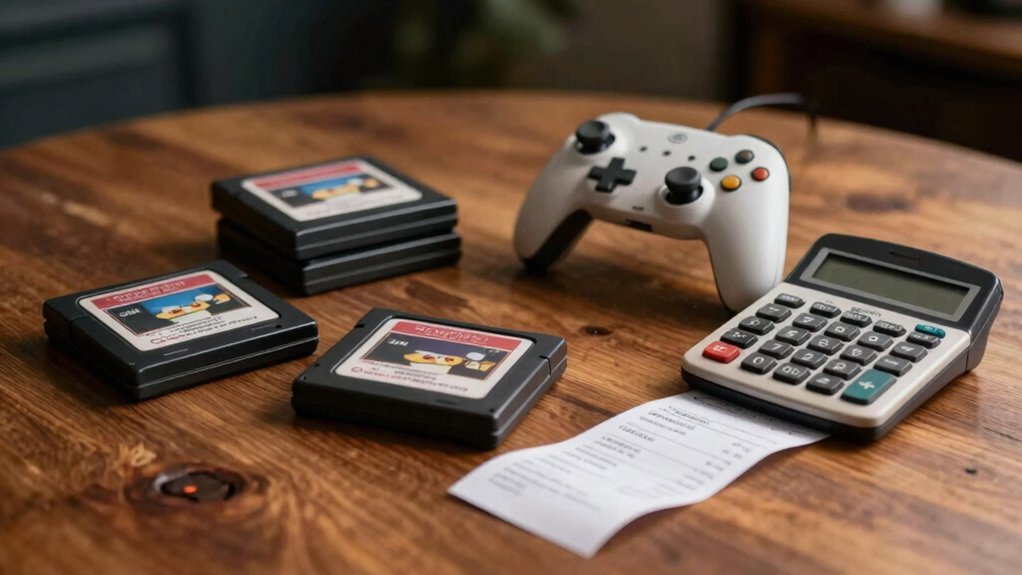
Check your game’s condition and grade it A, B, or C—include every cable, controller, manual, and original box to hit the highest tier. Bundle accessories and any missing inserts before you head to the store; complete sets fetch better offers across platforms. Time your trade‑in with promotions or peak demand periods, like holiday bonuses, to boost cash or store credit. Keep reading and you’ll discover more ways to maximize your payout.
Compare GameStop Trade‑In Value Across Competing Platforms

How does GameStop’s trade‑in payout stack up against the competition? You’ll find GameStop’s trade‑in value sits between $143 and $154 for a Nintendo Switch OLED, while Decluttr tops out near $54 and Swappa can reach $288. Best Buy’s in‑store offer mirrors GameStop’s convenience but often lands a few dollars lower, and Amazon Trade‑In typically awards a gift‑card amount comparable to GameStop’s regular rate. As a Pro member, you snag an extra 10% in cash or store credit, nudging the payout higher than the standard option. When you compare these competing platforms, condition and packaging drive the gaps, so a quick value comparison helps you decide which payout option maximizes your return, especially if you consider platform-specific policies and how they affect final value.
Grade GameStop Trade‑In Value: Condition & Accessories Checklist
What condition does your device really have, and are all the original accessories and packaging intact? Use the GameStop checklist to gauge Grade A, Grade B, or Grade C status. A Grade A console arrives with all cables, controllers, manuals, and original box—no scratches, fully functional, and all accessories present. Grade B tolerates minor wear, missing a non‑essential item, but still includes the core set. Grade C shows significant damage or missing key parts, which drags down trade‑in value. For games, ensure rulebooks and guides sit inside the case; missing inserts push you into a lower grade. Packaged items fetch higher offers, so bundle everything before heading to the store. A complete, pristine set maximizes your GameStop trade‑in value. Condition grading standards help you understand how to assess your device accurately before you visit.
Timing Your Trade‑In: Prep, Promotions, and Peak Demand

Ever wondered when your trade‑in will fetch the highest return? You boost boost trade-in value by syncing your game trade‑in with promotions timing and peak demand periods. Check GameStop’s website for current promotions; a December 2022 bonus added 50 % to every buyback, and similar deals appear around holidays. Align your timing with seasonal trends—holiday shopping, back‑to‑school, and summer releases all spike demand for high‑demand titles. When you bring items in during those windows, stores often raise cash or store credit offers. Anticipate upcoming releases that could lift demand, clean and console, and keep receipts handy. By planning around promotions and peak demand, you maximize your buyback payoff without extra effort. Additionally, tracking the timing strategy can help you decide the optimal moment to trade in specific titles that are known to spike in value.
Frequently Asked Questions
Why Are Gamestop Trade-In Values so Low?
You’re seeing low values because GameStop discounts for wear, missing accessories, and inventory surplus; store‑credit pays more than cash, and regional demand, promotions, and seasonal offers all affect the final price.
Are 87% of Games Lost?
No, you can’t claim 87 % of games are lost; the data doesn’t support that figure, and trade‑in values depend on condition, completeness, and market demand, not a fixed loss rate.
How to Get the Most Value Out of a Trade-In?
Maximize your trade‑in value by cleaning the game, keeping original boxes and manuals, timing the trade during promotions, comparing cash, store‑credit, and online offers, and bundling items for higher overall payouts.
How Does Gamestop Determine Trade-In Value?
You get a price based on condition, demand, stock, accessories, edition rarity, and membership perks; GameStop scores each factor, adds any Pro‑member bonus, and then calculates the final trade‑in offer.
In Summary
By weighing platform offers, checking your game’s condition and accessories, and timing your trade‑in with sales or high‑demand periods, you’ll squeeze the most value out of your physical collection. Use the checklist, stay alert for promotions, and act when demand peaks—then you’ll walk away with the best possible price every time.


Leave a Reply