
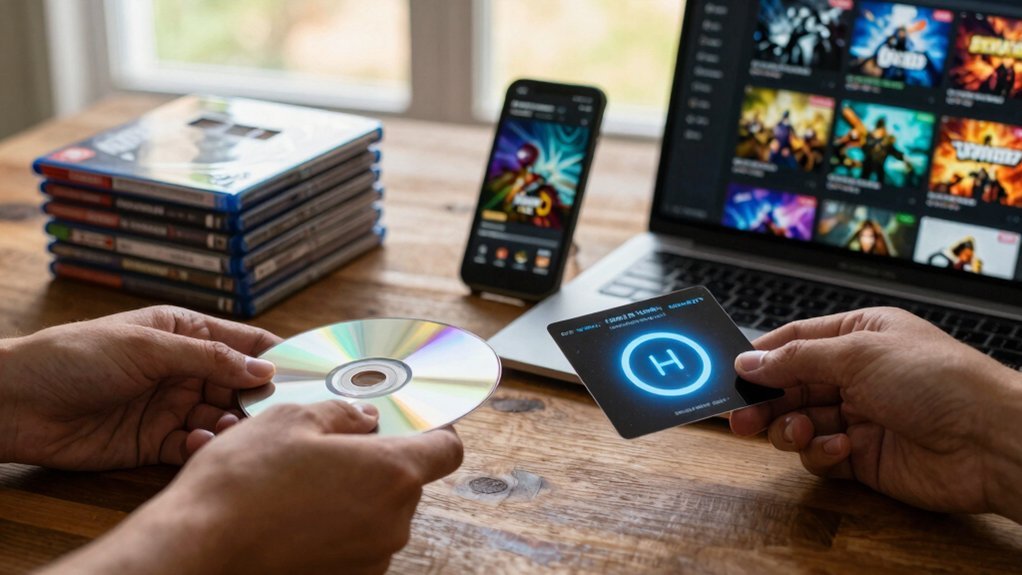
You’ll see that game prices shift by region—UK digital copies often cost more than physical ones, the US keeps the gap tight, and Japan, Canada, and Australia each balance taxes, retailer cuts, and discounts differently. Market‑specific taxes, currency conversion, and retailer strategies drive these gaps, while digital storefronts usually take about 30% and physical retailers split costs among manufacturing, licensing, and retail margins. If you keep going, you’ll discover how to exploit these variations for cheaper purchases.
What Are the Regional Differences in Digital vs Physical Game Pricing?

Why do prices vary so much across regions? You’ll notice regional pricing creates a noticeable price gap between digital vs physical formats. In the UK, a UK digital premium pushes digital titles well above physical copies—Xenoblade Chronicles 2 sells for £50 on the eShop but can be found £11 cheaper elsewhere. The United States shows a tighter price discrepancy, with digital and physical costs nearly matching. Japan mirrors this balance, though occasional digital discounts appear. Canada and Australia follow local store practices, so regional pricing sometimes favors digital, sometimes physical copies. These patterns illustrate how market‑specific taxes, currency conversion, and retailer strategies shape the digital‑physical price gap in each region. LED lighting details
Why Do Platform Fees and Retail Cuts Affect Digital vs Physical Game Pricing?
How do platform fees and retailer cuts shape the price gap between digital and physical games? You’ll notice that digital storefronts usually keep about 30 % of each sale, leaving 70 % for the publisher, while physical games allocate roughly the same 30 % to retailers. Add licensing costs (≈15 %) and manufacturing costs (≈5 %) for physical copies, and the net revenue differs sharply. Those percentages shift with regional pricing, taxes, and local discounts, so a UK digital title can cost more than its disc counterpart, whereas US prices often line up. In addition, VRM cooling considerations on the hardware side can influence overall cost structure and availability of platform features across regions.
How to Cut Costs on Digital vs Physical Game Purchases?

When you compare digital and physical game purchases, the key is to target the fees and hidden costs each format carries. You can lower the price by watching regional sales, exploiting store cut discounts, and avoiding unnecessary manufacturing and shipping expenses. Here’s how to trim each cost component:
- Grab digital sales during regional promotions where the store cut drops below 30 %.
- Choose physical editions in markets where retailer cut is lower than the digital price premium.
- Hunt for first‑party digital titles that let the publisher keep most of the price.
- Buy used physical copies to bypass manufacturing and shipping fees entirely.
- Use price‑tracking tools to compare regional pricing and buy where the publisher share is highest. regional promotions
Frequently Asked Questions
What Is the 20 Rule for Video Games?
You’ll find the “20 Rule” means digital copies typically cost about twenty percent more than physical ones in certain regions, reflecting pricing gaps driven by taxes, currency differences, and retailer discounts.
Why Are Digital Games the Same Price as Physical Games?
You pay the same because publishers set a uniform regional price, balancing taxes, licensing, and retailer margins; digital stores can’t undercut physical retailers without hurting overall revenue, so they match the price.
Are 51% of Gamers Female?
You’ll find that 51% isn’t a solid universal figure; most recent studies place female gamers around half the market, typically 45‑50%, depending on region, definition, and methodology.
What Game Took 7 Years to Make?
You’re thinking of “The Last of Us Part II,” which took roughly seven years from concept to release, with its team iterating constantly, polishing gameplay, story, and visuals throughout that long development span.
In Summary
You’ve seen how regional quirks, platform fees, and retailer cuts create price gaps between digital and physical games. By recognizing where those gaps appear, you can strategically choose formats, hunt for regional sales, and leverage subscription services to stretch your budget. Ultimately, staying aware of the factors that drive pricing lets you get the best value, no matter whether you prefer a download or a disc.


Leave a Reply