

You’ll keep airflow clear, so heat doesn’t pile up around your GPU and CPU, letting budget coolers work efficiently and temperatures stay low. Organized wires reduce dust traps, lower the chance of accidental pulls, and make upgrades or swaps fast and hassle‑free. Cheap tools like Velcro straps, zip ties, and simple cardboard channels give you a professional look without breaking the bank. Continue, and you’ll discover more practical tips and DIY solutions.
Why Cable Management Matters for Budget Gamers
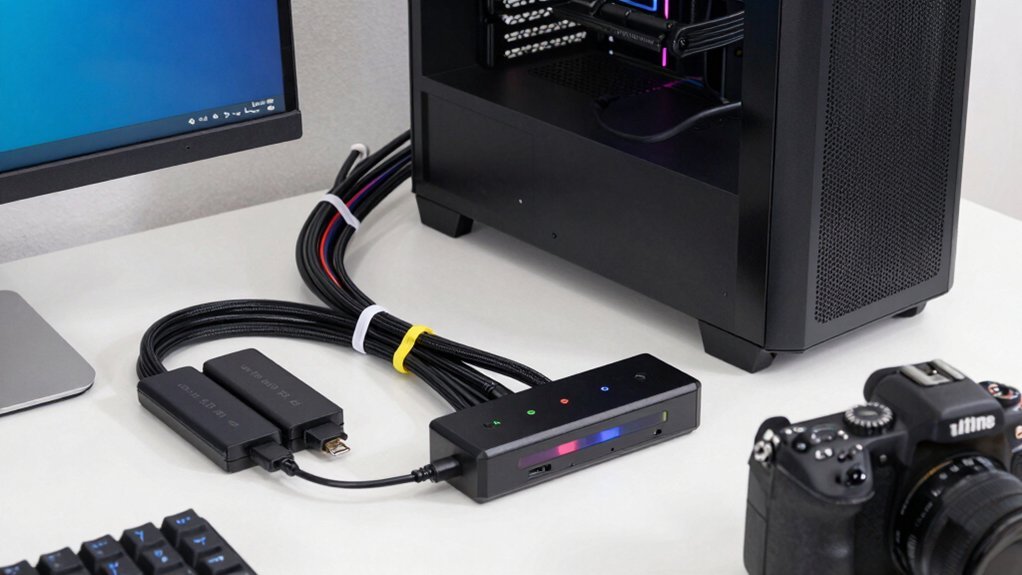
Why does cable management matter for budget gamers? You’ll notice that proper cable management keeps airflow unblocked, so fans and vents work efficiently without pricey coolers. By routing cables away from hot zones, you reduce heat buildup and protect mid‑range parts from thermal throttling.
Neatly organized wires also speed up maintenance; swapping RAM or a GPU becomes a quick, hassle‑free task instead of a tangled mess.
Even on a modest build, tidy cables boost perceived quality, making your rig look professional and well‑kept.
Affordable tools—Velcro straps, zip ties, and clips—cost next a few dollars but pay off in reliability and easier troubleshooting. In short, good cable management preserves performance, saves money, and simplifies future upgrades.
For reference, consider selecting adhesive or magnetic cord organizer clips that fit standard cable diameters (e.g., 6mm to 7.5mm) to maintain clean, modular setups cable size compatibility and ensure easy, residue-free removal if you need to reconfigure.
How Proper Routing Improves Airflow and Lowers Temps
Ever wondered how a few well‑placed cables can keep your PC cool? When you route cables away from fans and the main airflow paths, you eliminate obstructions that trap heat around the CPU and GPU. Run them along case edges or behind panels, and you create clean channels that let cooler air reach components efficiently. Reducing cable density with Velcro ties or zip ties cuts turbulence and dead zones near ducts, while separating power from data wires lowers electromagnetic interference and keeps fan speeds steady. Planning a modular layout that anticipates upgrades prevents future clutter, preserving optimal airflow and keeping temperatures down. Good cable management isn’t just tidy—it’s a direct path to cooler, more reliable performance. 10-year warranty
How a Tidy Build Extends Component Lifespan
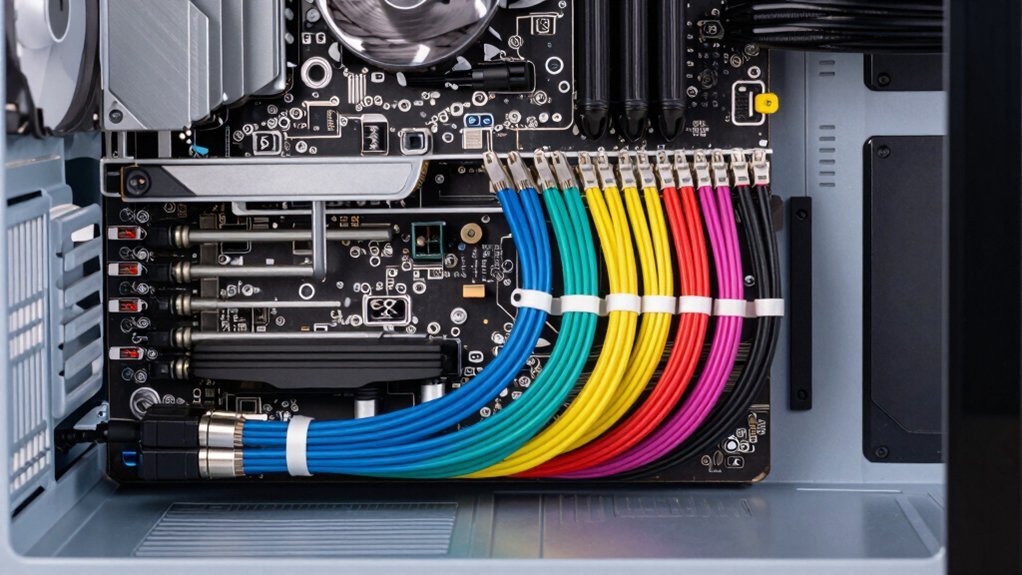
When you keep cables neat, heat builds up less and thermal stress drops, so components stay cooler longer. This protection cuts the chance of sudden failures and lets you run your rig without constant worries. Regular labeling and easy access also support safer, faster swaps during upgrades USB-C Power Delivery 20W.
Reduced HeatRed Heatics
Ever notice how a clean cable layout can keep your PC cooler? Good Cable Management creates clear paths for air, delivering Improved Airflow that carries heat away from the CPU and GPU. When you route cables neatly, you eliminate turbulence that slows fan efficiency, letting internal air move steadier and keep components at lower temperatures during long gaming sessions.
Fewer tangled wires also reduce surface area for dust, so cooling performance stays consistent over time. Secure, well‑planned routes prevent accidental shifts that could block vents or fans, preserving airflow when you upgrade or service the machine. By keeping the interior organized, you protect heat‑sensitive parts and extend their lifespan without extra cooling hardware. In addition, modular and expandable cable management kits can help you adapt to changes in your setup without drilling or reworking surfaces. Cat-Proof Protection Cable Management Kit
Protection Reduces Failure Risks
A cooler interior means less strain on your hardware, but the real long‑term benefit comes from how a tidy build safeguards components. Good cable management protects your parts by keeping wires away from sharp edges and moving fans, so they won’t get nicked or frayed. When you route cables cleanly, you also prevent loose connections near the PSU, cutting the risk of sudden shutdowns or voltage spikes that stress the motherboard and GPU. Organized bundles keep dust out of hard‑to‑reach spots, preserving airflow and cooling efficiency, which directly prolongs component lifespan. With clear, labeled paths you’ll avoid accidental pulls during upgrades, and the overall protection reduces failure risks, keeping your PC reliable for years. Ventilation and airflow considerations also play a crucial role in maintaining stable temperatures as you optimize your setup.
Easy Component Replacements
How often have you needed to swap a RAM stick or upgrade a GPU, only to wrestle with a tangled mess of cables? A tidy build lets you locate and pull out components in seconds, cutting replacement time and protecting nearby parts. When you use Velcro Straps and plan clear Cable Routing, each cable stays where it belongs, so you won’t accidentally yank a connector while reaching for a new card. Labeled leads let you identify power, data, and fan wires at a glance, eliminating the need to trace every lead. Bundled cables also reduce strain on ports, extending their lifespan. An accessible layout keeps critical hardware within reach, speeding troubleshooting and ensuring aging parts last longer. Cable routing fundamentals help maintain consistent airflow and prevent overheating in compact builds.
Quick Wins: Re‑use Zip Ties, Velcro, and Sleeves
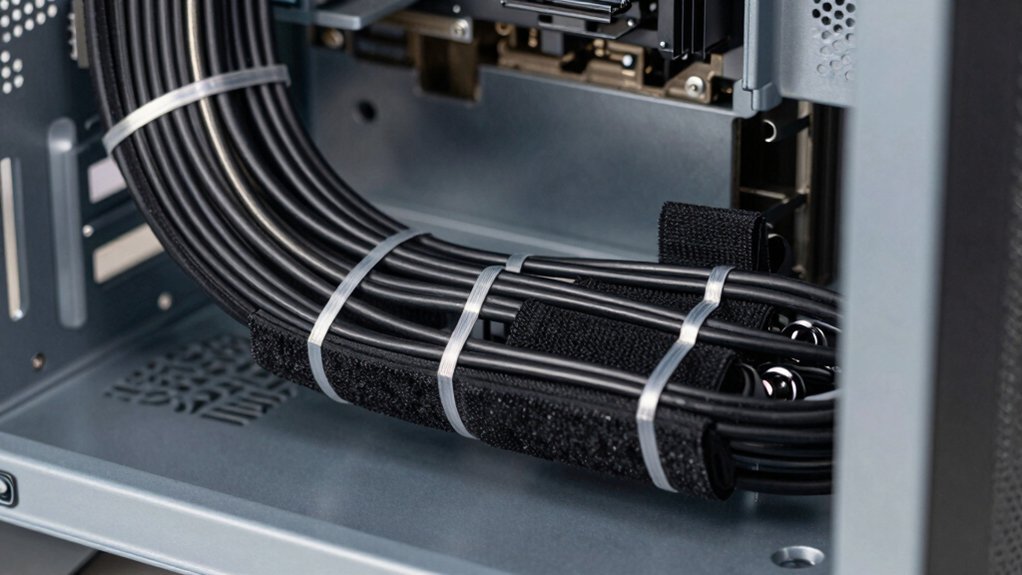
You can keep costs down and cut waste by reusing zip ties, Velcro straps, and cable sleeves. These reusable fasteners let you regroup wires during upgrades without cutting anything, saving you time and effort. Rotating and labeling your cable setup also helps maintain organization over time, ensuring you can quickly locate cables during future upgrades growth planning. Bundling everything neatly behind the motherboard tray and along case edges gives an instant, tidy look without any special tools.
Reusable Zip Ties
Ever considered how much time and money you waste replacing zip ties every time you tweak a build? Reusable zip ties let you unfasten, reposition, and lock again without cutting, so each adjustment saves a few dollars and a handful of minutes. Pair them with Velcro straps for quick, tool‑free re‑secure, and you’ll notice the Reuseability advantage instantly.
The plastic loops stay intact, eliminating the need to buy fresh ties after every upgrade. You also reduce cable wear because you never overtighten or slice the fastener, preserving connector integrity.
Over months of swaps, the cost difference adds up, and your cable management stays tidy, modular, and ready for future hardware without extra expense.
Velcro Sleeves Simplify
Ever wondered why a single Velcro sleeve can replace a whole mess of zip ties in seconds? You’ll find that Velcro straps give you instant, reusable bundling, slashing setup time and keeping cable management tidy. The adjustable tension protects cables from over‑tightening, and when upgrades roll around you can re‑configure without cutting anything. Pairing sleeves with zip ties lets you anchor critical runs while retaining the flexibility to reorganize later, preserving routing options for future changes.
- Snap a sleeve around power, data, and front‑panel cables for a clean visual grouping.
- Use Velcro straps to fine‑tune tension, preventing wear on connectors.
- Combine a few zip ties as permanent anchors, then wrap sleeves over the rest for easy adjustments.
- Re‑use the same sleeves after upgrades, cutting waste and saving money.
DIY Cable Management Channels With Cardboard, Foam, or 3‑D Prints
How can you keep your rig tidy without splurging on pricey accessories? Use Velcro Straps for quick fixes and then build DIY Cable Management channels from cardboard, foam, or 3‑D prints.
Cardboard lets you prototype a guide in minutes; just cut, fold, and tape it along case edges, but expect it to warp under heat or humidity.
Cardboard quick‑prototype guides: cut, fold, tape—warps under heat or humidity.
Foam offers flexible, heat‑resistant inserts that you can carve to fit odd angles or curved surfaces, keeping airflow clear while hugging cables snugly.
If you own a printer, design precise 3‑D‑printed channels that snap into place, delivering durable, custom‑fit routing.
Regardless of material, space cables, preserve airflow, and leave room for future upgrades, so your setup stays neat and functional.
Planning Your Cable Management Layout Before Screwing In Anything
Where should your cables run before you even tighten a screw? You’ll save hours by doing cable management planning up front. Sketch a quick diagram, note power, data, and peripheral routes, and keep airflow clear. Decide which components get labeled ties or sleeves, and leave slack for future upgrades. A solid plan prevents frantic rerouting later and keeps the front view tidy.
- Map power and data paths to avoid crossing fan zones.
- Mark where ties, sleeves, or clips will sit for a clean front.
- Reserve extra length for RAM, GPU, or storage swaps.
- Use a checklist to verify every essential route before you start screwing.
Following this simple workflow lets you assemble faster, maintain airflow, and keep your build looking professional without extra hassle.
Modular Power Supplies for Easy Cable Management on a Budget
You’ll notice that a modular PSU lets you pull only the cables you actually need, so routing becomes a breeze.
Choosing a budget‑friendly, fully or semi‑modular unit cuts down on excess length and tangles, keeping airflow clear.
Look for 80 PLUS efficiency and a solid warranty to balance cost, organization, and reliability.
Modular Power Supplies Simplify Routing
Ever wonder why a modular power supply feels like a shortcut to a tidy build? You’ll notice that modular power supplies let you drop any cable you don’t need, instantly cutting clutter and improving airflow. By unplugging only the required rails, you shorten each lead and avoid tangled bundles behind the motherboard tray, making cable management effortless. The detachable design also saves you from buying extra wiring you’ll never use, keeping the budget lean. Fewer active cables mean quicker initial assembly and easier upgrades, so you spend less time untangling and more time gaming or working.
- Detach unused cables.
- Shorten lengths to fit exact routes.
- Reduce airflow obstruction.
- Streamline future upgrades.
Budget-Friendly Options Reduce Clutter
Why settle for a tangled mess when a budget‑friendly modular PSU can slash clutter instantly? You’ll keep only the cables you need, so every extra wire disappears. Velcro Straps secure the remaining leads, keeping them tight and out of the way. Modular PSUs let you trim excess length, which boosts airflow and cuts dust‑trap zones without pricey accessories. The streamlined setup means you can route power directly to the GPU, motherboard, and drives, avoiding the maze of loops that usually plagues cheap builds. When you upgrade, you swap just the needed module, saving time and keeping the interior tidy. This approach delivers a cleaner look, easier maintenance, and a cooler system—all on a budget.
Case‑Built Cable Management Tools: Hooks, Grommets, and Trays
Case‑built cable management tools—grommets, routing trays, and hooks or clips—keep your build tidy and functional. You’ll notice how grommets shield cables at openings, preventing abrasion and extending lifespan. Integrated trays conceal wires, channeling them into a single, clean path that boosts airflow. Hooks and clips let you secure cables without permanent ties, so upgrades stay painless. Leveraging these built‑in features also improves front‑panel aesthetics and simplifies maintenance.
- Grommets – install at every case edge to protect cables from wear.
- Trays – route multiple wires through dedicated channels for neatness and cooling.
- Hooks – attach reusable clips to guide cables around bends and components.
- Clips – secure loose strands, allowing quick re‑routing during future upgrades.
Easy Color‑Coding Hacks for Faster Cable Management Upgrades
When you assign a distinct color to each cable function—red for power, blue for data, yellow for fans—you’ll instantly spot the right wire during upgrades, cutting downtime and preventing misplugs. Stick to a simple palette of 2‑4 contrasting hues so the visual cue stays clear even in dense runs.
Apply colored heat‑shrink tubing or reusable silicone tags at major junctions like the PSU, motherboard, and GPU; this lets you trace paths without guessing.
Keep connector colors consistent—orange for SATA, purple for PCIe power—to avoid misplugging during maintenance.
Finally, sketch a quick color‑coded map of your build, marking where each cable type runs. This visual guide streamlines future upgrades and keeps your cable-management system tidy and efficient.
Keep Cables Dust‑Free for Consistent Performance
Ever notice how a clean cable layout keeps your system breathing easily? Dust on cables creates tiny bridges that trap particles, slowing airflow and raising temps. By keeping bundles dust‑free, you let fans and heatsinks work efficiently, preserving performance during long sessions. Use Velcro Straps to secure cables tightly, limiting open surfaces where dust can settle. Regularly vacuum routing paths and apply anti‑static wipes to maintain clear airflow channels.
- Bundle cables with Velcro Straps to reduce exposed area.
- Route cables away from intake fans for unobstructed airflow.
- Cover open trays with dust filters or mesh screens.
- Schedule quick visual checks and spot‑clean dust‑accumulation weekly.
Diagnose and Fix Typical Cable Management Problems at Home
What’s the quickest way to spot a cable‑management nightmare at home? You’ll see tangled power and data cords blocking fans, a mess of slack, and connectors that look identical. First, turn the case on and watch for overheating or fan noise—those are red flags. Then, pull the side panel and trace each cable. If a wire rubs a fan blade or sharp edge, replace its tie with a Velcro strap; the strap holds without cutting and lets you adjust later. Next, gather excess length and route it behind the motherboard tray, keeping the airflow path clear. Label each connector with a small tag so you can swap GPUs or add RAM without guessing. Finally, use cable clips to secure any remaining loose sections, and you’ll have a tidy, service‑friendly build.
Save Time and Money on Future Upgrades With Clean Cable Management
Ever wonder how a tidy cable layout can slash upgrade time and cost? When you keep Cable Management neat, you pull out a GPU or add RAM without hunting through a knot of wires. You avoid accidental disconnects during Maintenance, which means fewer repairs and less downtime. A clean setup also lets you spot a faulty line instantly, cutting troubleshooting from hours to minutes. Reusable ties, clips, and sleeves keep everything modular, so reconfiguring costs less labor.
- Route cables behind the panel and label each connection.
- Use zip ties or Velcro straps that can be removed and reused.
- Separate power and data lines to prevent interference.
- Keep spare lengths in organized sleeves for future swaps.
Bottom Line: Cheap Cable Management Delivers Big Returns
How much can a few cheap zip ties really boost your PC’s performance? You’ll find that even inexpensive Velcro straps and cable ties can clear pathways, letting airflow reach every fan and vent. When cables no longer block vents, temperatures stay lower, which translates into smoother gaming sessions and longer component life. A tidy interior also cuts dust accumulation, so you spend less time cleaning and more time using the machine. Troubleshooting becomes a breeze because you can spot a loose connector in seconds instead of rummaging through a tangled mess. Upgrades go faster too—just follow the existing routing and snap on new straps. In short, cheap cable management pays off big by improving cooling, reliability, and maintenance efficiency.
Frequently Asked Questions
Does PC Cable Management Matter?
Yes, you’ll notice cooler temps, easier upgrades, and fewer connection headaches when you keep your PC cables tidy, so your system stays reliable and looks sharp without extra expense.
Do More Expensive HDMI Cables Really Make a Difference?
You won’t notice a visual boost with pricier HDMI cables; if they meet the right spec and length, cheap ones deliver identical 4K60/HDR performance, so the extra cost rarely matters.
Why Is Cable Organization Important in a Network?
You keep network performance reliable by preventing tangled cables, reducing interference, and allowing quick troubleshooting. Organized routes improve airflow, lower overheating risk, and make upgrades or replacements straightforward and painless.
Are Cable Management Boxes Worth It?
Yes, you’ll find cable management boxes worth it if you want a tidier build, better airflow, and quicker upgrades; they hide clutter, protect cords, and simplify maintenance without breaking the bank.
In Summary
In the end, keeping your budget rig’s cables tidy isn’t a luxury—it’s a smart, cost‑effective move. Clean routing boosts airflow, drops temps, and protects parts from dust, which all extend your components’ lifespan. Simple tricks like zip ties, velcro, or DIY channels cost next and pay off in smoother performance and easier upgrades. By spending a few minutes on cable management now, you’ll save time, money, and headaches down the road.


